
Investing in San Gabriel Valley: Top Neighborhoods to Watch
Which San Gabriel Valley neighborhoods are best for real estate investment in 2026?
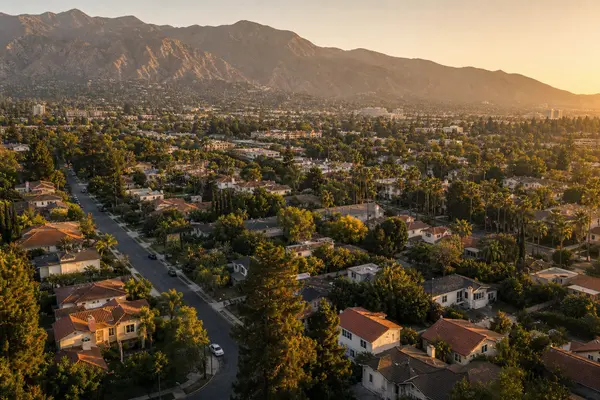
San Gabriel Valley offers investors a compelling mix of entry-level markets, mid-range appreciation plays, and value-add opportunities. Pasadena anchors the high end with durable demand, while cities like El Monte, Temple City, and Alhambra offer lower price points, strong rental demand, and meaningful upside driven by transit investment and ADU-friendly zoning. The right neighborhood depends on your capital, timeline, and strategy, but several SGV pockets are drawing serious investor attention right now.
I work with investors across the SGV regularly, and the question I hear most often is some version of: "Where do I get the most for my money without taking on blind risk?" The honest answer is that there's no single right answer, but there are neighborhoods where the fundamentals consistently line up. Let me walk you through what I'm watching and why.
What Makes the SGV Attractive to Investors in 2026
Before diving into specific neighborhoods, it helps to understand why the San Gabriel Valley keeps appearing on serious investors' radar. A few structural factors drive this.
Supply is structurally constrained. Los Angeles County has chronically underbuilt for decades. According to the California Department of Housing and Community Development, California needs roughly 2.5 million new homes by 2030 to meet demand, a gap the SGV reflects locally. New construction here is limited by lot availability, zoning, and cost, which means existing inventory holds value.
Transit infrastructure is expanding. The Metro Gold Line (now the A Line) already connects Pasadena, Arcadia, and Monrovia to downtown Los Angeles. Future extensions and the broader LA Metro buildout tied to the 2028 Olympics are accelerating investment in transit-adjacent corridors throughout the valley. Historically, properties within a half-mile of rail stations command a measurable premium, and several SGV cities still have room to run on that front.
ADU policy creates income potential. California's ADU laws, strengthened through legislation tracked by the California Legislative Information portal, have made it significantly easier to add accessory dwelling units on single-family and multifamily lots. In the SGV, where lot sizes are often generous by LA standards, this creates a real value-add path for investors. I've written in detail about this in The ADU Opportunity in the San Gabriel Valley, the short version is that a well-executed ADU can meaningfully change the income math on a property.
Rental demand is persistent. The U.S. Census Bureau's American Community Survey consistently shows LA County homeownership rates well below the national average, which means a large renter population competes for limited rental supply. SGV cities benefit from this dynamic, particularly those near employment centers, community colleges, and medical facilities.
Neighborhoods I'm Watching Closely
Pasadena: Stable Appreciation, Strong Fundamentals
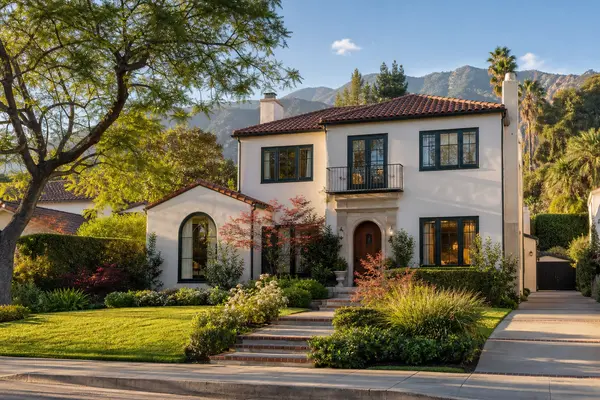
Pasadena is the SGV's flagship market and, for many investors, the safest long-term hold. Demand is driven by employment at institutions like Caltech and the Jet Propulsion Laboratory, a walkable Old Town core, and a housing stock that ranges from craftsman bungalows to mid-century condos. The trade-off is price: Pasadena's median home values are among the highest in the valley, which compresses cap rates on rental plays.
Where I see investor opportunity in Pasadena is in the value-add category, properties that need cosmetic work, have underutilized lot space for an ADU, or are priced below their renovated comparables. The city's Planning and Community Development department has been relatively ADU-friendly, and the rental market for high-quality units near the Gold Line's Del Mar and Memorial Park stations stays tight. For a deeper look at the Pasadena market specifically, my Pasadena Real Estate Guide covers the neighborhood-by-neighborhood breakdown.
El Monte: The Emerging Value Play
El Monte is the SGV market I get the most questions about from investors who've been priced out of Pasadena and Arcadia. Entry prices are lower, lot sizes tend to be workable, and the city has been actively courting development through its general plan update process, tracked through the City of El Monte's official site.
The fundamentals supporting El Monte as an investment market include proximity to the 10 and 60 freeways, a large renter population, and meaningful upside if the area continues its trajectory. I covered this in detail in The El Monte Evolution, the key takeaway is that investors who get in ahead of the curve on transitional markets tend to see the best returns, and El Monte fits that profile today.
The risk worth naming: El Monte's appreciation has historically lagged the western SGV, and days on market tend to run longer. This is not a flip-and-go market, it rewards patient, income-oriented investors more than short-term plays.
Temple City: The Underrated Mid-Market
Temple City sits between Arcadia and El Monte in both geography and price, and it's consistently undervalued relative to its neighbors. The city has strong owner-occupant demand, well-maintained residential streets, and a commercial corridor along Las Tunas Drive that's seen renewed activity. I've written about why Temple City deserves more investor attention in The SGV Neighborhood Nobody Talks About Enough.
For investors, Temple City's appeal is in the price-to-quality ratio. You're buying into a market with low vacancy, stable long-term tenants, and a city government that has been proactive about zoning updates under state housing law. The City of Temple City has updated its housing element in compliance with state requirements, which signals a development-friendly posture going forward.
Alhambra and San Gabriel: Transit-Adjacent Density Plays
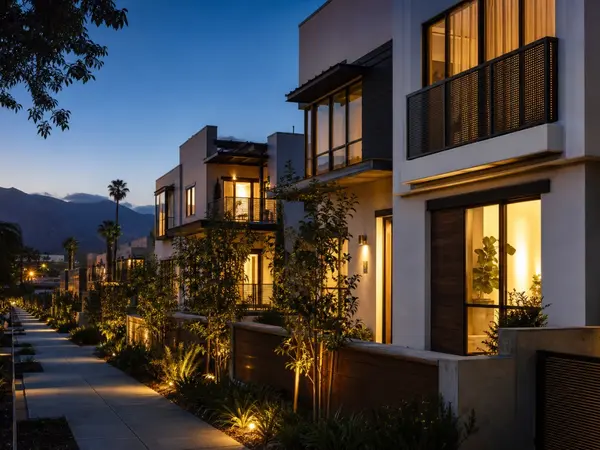
Alhambra and the City of San Gabriel sit close to the western SGV's transit spine and offer a mix of single-family homes, small multifamily properties, and commercial-adjacent lots. For investors interested in small multifamily, duplexes, triplexes, and fourplexes, these cities offer more inventory than most SGV markets.
The National Association of Realtors has consistently flagged small multifamily as one of the more resilient investment categories in supply-constrained coastal markets, and Alhambra and San Gabriel fit that thesis. Rental demand from the large commuter population and proximity to Cal State LA and community colleges keeps vacancy low.
One thing I tell investors looking at these markets: the due diligence on small multifamily is more involved than single-family. Rent control exposure under California's AB 1482 tenant protection law (Civil Code Section 1946.2) applies to most properties 15 years old or older that aren't otherwise exempt. Know what you're buying before you close.
Monrovia and Arcadia: Appreciation with Room to Run
Monrovia and Arcadia are worth mentioning for investors with a longer time horizon and higher capital tolerance. Both cities sit along the A Line, both have seen consistent appreciation, and both benefit from the kind of owner-occupant demand that keeps values supported even in softer markets.
Arcadia in particular has attracted significant interest from buyers relocating from higher-cost areas, which supports prices at the upper end. Monrovia's Old Town district has become a genuine destination, which tends to support both residential values and commercial-adjacent investment. The City of Monrovia has been active on transit-oriented development planning, which creates longer-term upside near the station corridor.
How to Evaluate an SGV Investment Property
Market selection is only half the equation. Here's the framework I walk my investor clients through before we make an offer:
- Gross rent multiplier and cash flow: Know your target rent before you write the offer. In the SGV, rental comps vary significantly by city and property type. The Consumer Financial Protection Bureau has solid resources on understanding investment property financing, which affects your cash flow math meaningfully.
- ADU feasibility: Check lot coverage, setbacks, and utility capacity. A property with ADU potential is worth more than one without, but only if the numbers work after construction costs.
- Rent control exposure: California's AB 1482 applies a 5% plus CPI annual rent increase cap to most older properties. Know whether your target property is exempt or covered before you underwrite it.
- Property tax baseline: California's Proposition 13 means your tax basis resets at purchase. The Los Angeles County Assessor's Office is the authoritative source for current assessed values and tax rate information by parcel.
- Exit strategy: Is this a long-term hold, a value-add flip, or a 1031 exchange candidate? The SGV rewards patient investors more than traders, make sure your timeline matches the market.
| Neighborhood | Investment Profile | Key Investor Consideration |
|---|---|---|
| Pasadena | Stable appreciation, value-add | Higher entry price; strong ADU and rental upside near transit |
| El Monte | Emerging value play | Lower entry; patient income-oriented strategy works best |
| Temple City | Underrated mid-market | Strong price-to-quality ratio; low vacancy; zoning updates underway |
| Alhambra / San Gabriel | Small multifamily / density | AB 1482 rent control applies to most older units; check exemptions |
| Monrovia / Arcadia | Appreciation + transit corridor | Higher capital required; transit-oriented development creates upside |
Every situation is different, and the only way to know whether a specific property pencils out is to run the actual numbers with someone who knows this market. That's exactly the kind of analysis I do with investors before we start writing offers.
Frequently Asked Questions
Is San Gabriel Valley a good place to invest in real estate in 2026?
Yes, for investors who go in with realistic expectations. The SGV benefits from structural supply constraints, persistent rental demand, and transit investment that supports long-term appreciation. It's not a high-yield cash flow market by national standards, coastal California rarely is, but it's a durable wealth-building market for investors with a multi-year horizon. The California Association of Realtors tracks statewide and regional market data that provides useful context for evaluating SGV trends against the broader state picture.
Which SGV city has the lowest entry point for investors?
El Monte and Baldwin Park consistently offer lower median prices than western SGV cities like Arcadia or Pasadena. That lower entry point comes with trade-offs, longer days on market, lower appreciation rates historically, and a different tenant profile. For investors focused on cash flow over appreciation, the eastern SGV is worth a serious look, but due diligence on rental comps and exit liquidity is essential.
Do ADUs make sense as an investment strategy in the SGV?
In many cases, yes, but the math depends on your specific lot, local construction costs, and the rental market in that city. California's ADU laws have significantly reduced permitting barriers, and SGV cities have generally complied with state requirements. The income from a well-placed ADU can meaningfully improve a property's cash flow and appraised value. I'd recommend reading through The ADU Opportunity in the San Gabriel Valley for a detailed breakdown before you commit to a strategy.
How does California's rent control law affect SGV investment properties?
California Civil Code Section 1946.2 (AB 1482) caps annual rent increases at 5% plus local CPI for most residential properties 15 years old or older that aren't otherwise exempt. Single-family homes and condos owned by individual landlords may qualify for an exemption if proper notice is provided to tenants. This is a material factor in your underwriting, confirm the exemption status of any property you're considering with a real estate attorney before closing.
What's the difference between investing in Pasadena versus a lower-cost SGV city?
Pasadena offers more liquidity, stronger appreciation history, and a deeper pool of qualified buyers and tenants, but you'll pay for those advantages at acquisition. Lower-cost cities like El Monte or Baldwin Park offer higher potential yields on paper but require more active management, carry more market risk, and have historically taken longer to appreciate. The right choice depends on your capital, your risk tolerance, and whether you're optimizing for income today or equity growth over time. I walk my investor clients through this trade-off before we start searching.
The Bottom Line
The San Gabriel Valley isn't a single market, it's a collection of distinct neighborhoods, each with its own price point, tenant base, and investment thesis. Knowing which one fits your goals is the difference between a property that performs and one that just sits on your balance sheet.
If you're evaluating SGV investment opportunities and want a clear-eyed analysis of what's available, what's realistic, and where the actual upside is, I'd like to help. Schedule a consultation and let's look at the numbers together.
Equal Housing Opportunity. Eddy Chen is a Broker Associate with REAL Brokerage. This article is general information only and does not constitute legal, tax, or financial advice. Confirm your own numbers and situation with your attorney, tax advisor, lender, or escrow officer before making any investment decision.
Categories
Recent Posts