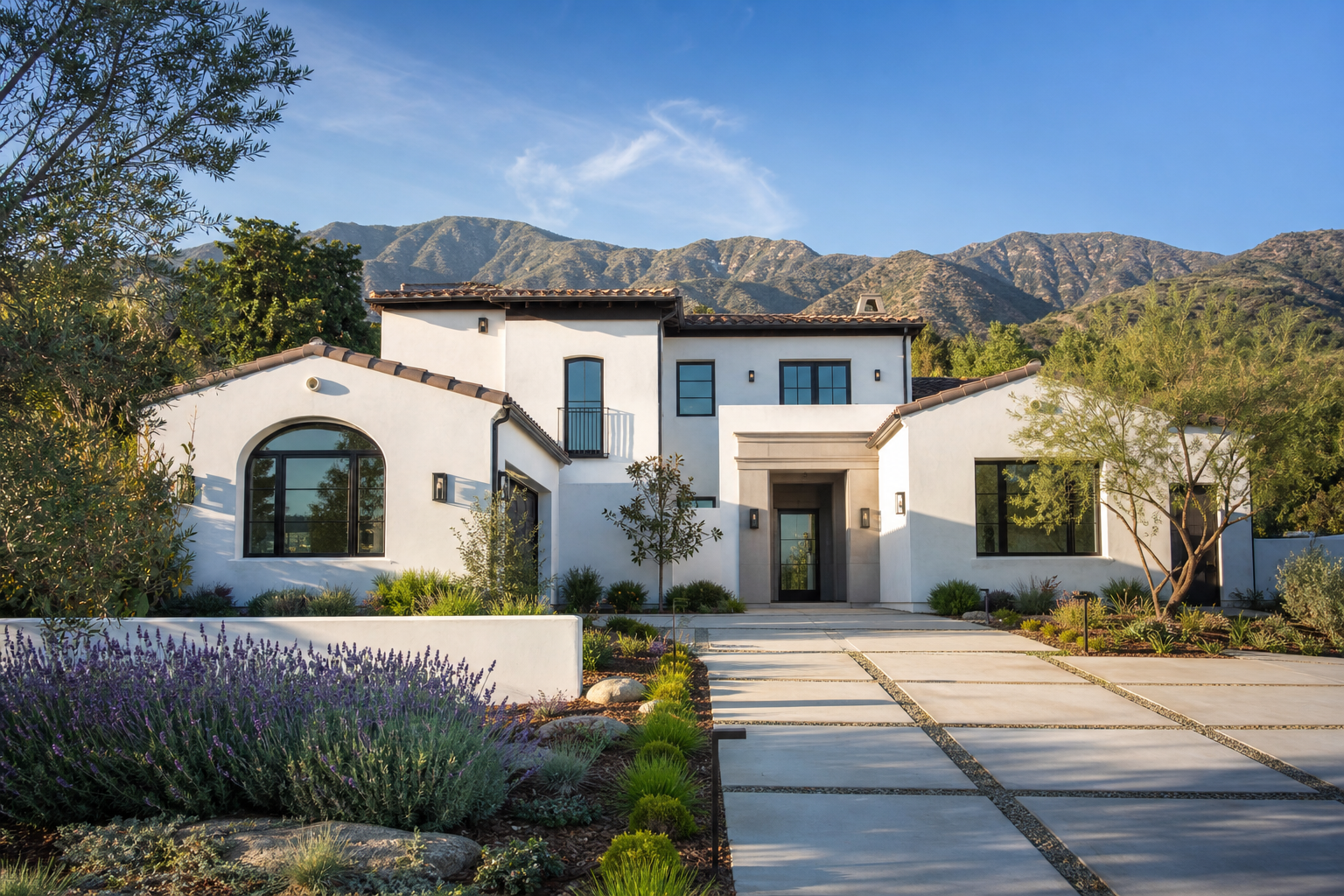

The ADU Opportunity in the San Gabriel Valley — What Homeowners Need to Know
Why ADUs Have Become One of the Biggest Conversations in SGV Real Estate

A few years ago, adding a second unit to your property required navigating a complex web of local zoning restrictions that made the process slow, expensive, and in many cases effectively impossible.
That changed. California's ADU legislation — significantly reformed between 2017 and 2020, and refined further since — removed most of the local barriers that had blocked ADU development. Today, the vast majority of single-family properties in the San Gabriel Valley can add an accessory dwelling unit as a matter of right, without discretionary approval from a planning commission or neighborhood opposition process.
The result: SGV homeowners now have a genuine opportunity to create income-producing space, add meaningful value to their property, and in many cases house a family member while maintaining privacy. The opportunity is real, but so are the decisions that determine whether a project succeeds financially.
Here is what I've learned watching this play out across Arcadia, Alhambra, Monterey Park, San Gabriel, and the rest of the SGV.
What an ADU Actually Is — and the Different Types
An accessory dwelling unit is a secondary residential unit on a single-family lot. It has its own entrance, its own kitchen or kitchenette, its own bathroom, and functions as a self-contained living space.
California law currently recognizes several ADU types:
Detached ADU. A new freestanding structure built in the backyard or elsewhere on the lot, separate from the main house. Typically the most expensive option but offers the most privacy for both the primary homeowner and the tenant.
Attached ADU. An addition to the main house that creates a separate unit — typically through a new entry, internal separation, and separate kitchen and bathroom facilities. Less expensive than detached construction but more complex architecturally.
Garage conversion. Converting an existing detached garage into a living unit. Often the most cost-effective path to an ADU, since the structure already exists. The main tradeoff is losing garage parking — a real consideration in many SGV neighborhoods where parking matters.
Junior ADU (JADU). A unit created entirely within the footprint of the existing home, capped at 500 square feet. JADUs require an efficiency kitchen rather than a full kitchen and share certain utility connections with the main house. They're a lower-cost option for homeowners who want to add a rental unit without significant new construction.
Most SGV homeowners pursuing ADUs are either doing detached new construction in the backyard or converting an existing garage. The right choice depends on the lot, the existing structures, and the financial goals of the project.
What the Numbers Actually Look Like
Construction costs. ADU construction costs in the SGV currently run approximately:
- Garage conversion: $80,000–$180,000 depending on scope and finishes
- Attached ADU: $150,000–$280,000
- Detached ADU (new construction): $200,000–$400,000+
These are ranges — actual costs depend heavily on the specific contractor, the complexity of the project, local permitting fees, soil conditions, utility connection costs, and finish level. Getting three or more contractor bids from firms with specific SGV ADU experience is important.
Rental income. A well-constructed, market-rate ADU in the SGV typically generates:
- Studio or 1-bedroom ADU: $1,400–$2,000/month
- 2-bedroom ADU: $1,800–$2,800/month
Income varies by city, location within the city, unit size, and finish quality. Alhambra, Monterey Park, and San Gabriel ADUs in accessible locations can achieve the lower end of these ranges. Arcadia and Pasadena ADUs in well-maintained neighborhoods can achieve or exceed the upper end.
Value impact. This is where the math becomes compelling for many homeowners. Rental income capitalized at current SGV cap rates — roughly 4–5% — adds significant appraised value to a property.
A detached ADU generating $2,000/month ($24,000/year) in Arcadia, capitalized at a 4.5% rate, adds approximately $533,000 in value to the property. If the ADU cost $280,000 to build, the net value creation is approximately $253,000 — plus the income received during the holding period.
These numbers vary by property and market. But the value creation potential is real enough that ADU development has become a standard part of how experienced SGV investors and homeowners think about their properties.
The Permitting Process in the SGV
This is where many projects get delayed or go sideways, so it's worth understanding clearly.
Each incorporated city in the SGV has its own building department and its own ADU permitting process. The state law sets the framework — cities cannot arbitrarily deny ADU applications that meet state standards — but the process, timeline, and fee structure vary meaningfully by city.
Some cities have streamlined their ADU permitting and can turn around applications in weeks. Others have backlogs that stretch months. Researching the typical timeline in your specific city before you start a project helps you set realistic expectations.
Los Angeles County unincorporated areas — including parts of Hacienda Heights, Rowland Heights, and other eastern SGV communities — have their own permitting process through LA County, which operates separately from the incorporated cities.
Pre-approved ADU plans are available in some jurisdictions, which can significantly reduce plan check time and fees. Ask your contractor or a local permit expediter whether pre-approved plans are an option in your city.
Key permits typically required: Building permit, electrical permit, plumbing permit, and in some cases a grading permit for site work. The specific requirements depend on the ADU type and your city's process.
One pattern I frequently see: homeowners who start construction before permits are issued — sometimes by contractors who suggest it's fine to start early — and then face stop-work orders, fines, and mandatory corrections that cost far more than the proper permitting would have. Permit every ADU correctly from the start.
ADU Considerations Specific to the SGV
Lot size and setbacks. State law sets minimum setback requirements for ADUs — currently 4 feet from the rear and side property lines for detached ADUs. Your specific lot configuration, any existing easements, and the placement of existing structures all affect where and how large an ADU can be built.
Parking. State law limits cities' ability to require replacement parking when a garage is converted to an ADU, particularly near transit. But the practical reality of parking in many SGV neighborhoods — where street parking is limited — is worth thinking through carefully before you convert your garage and create a parking shortage for your own household.
Utility connections. ADUs typically need their own electrical panel and meter, and may require upgrades to the main electrical service. Water and sewer connections need to be sized appropriately. These infrastructure costs are often underestimated in early project budgets.
HOA restrictions. If your property is in an HOA community, verify whether the HOA's CC&Rs restrict ADU development. State law limits HOA authority over ADUs in certain ways, but the interaction between state law and HOA rules is an area where getting clear guidance before you invest in plans is worthwhile.
Tenant protections. If you rent the ADU, California's tenant protection laws — including AB 1482 rent control rules for qualifying properties — apply. Understanding your obligations as a landlord before you place a tenant is important.
Who ADUs Make the Most Sense For
Investors and homeowners seeking rental income. The income potential of a well-constructed ADU significantly improves the return profile of SGV properties that might otherwise produce minimal cash flow.
Multi-generational families. One of the most common ADU motivations I see in the SGV is housing a parent, adult child, or other family member on the same property while maintaining meaningful privacy. The cultural fit for this in the SGV's Chinese-American community in particular is strong.
Homeowners building long-term equity. Even if the income doesn't dramatically change monthly cash flow after construction financing costs, the value created by a permitted ADU is real and compounds over time.
Buyers evaluating properties with ADU potential. If you're purchasing a property specifically because of its ADU potential, it's worth having an architect or experienced contractor evaluate the site before you close — not after — to confirm the project is feasible and get a realistic cost estimate.
FAQ
Can I build an ADU on any SGV lot?
Most single-family lots in California can now support at least one ADU as a matter of right under state law. Some lots have constraints — minimum lot size, existing coverage, setback limitations — that may affect feasibility. Have the site evaluated specifically before committing to a project.
Do I need to owner-occupy the property to build an ADU?
California law eliminated the owner-occupancy requirement for ADU permits through January 2025. Check current law with your local building department for the latest requirements, as these rules have evolved.
How long does it take to build an ADU in the SGV?
From initial planning through construction completion, a typical detached ADU project in the SGV takes 9–18 months when you account for design, plan check, permitting, and construction. Garage conversions are often faster. Projects in cities with streamlined processes can move more quickly.
Will an ADU raise my property taxes significantly?
Under Proposition 13, only the value of the new construction is reassessed — not the entire property. The existing home's assessed value remains unchanged. You'll pay taxes on the appraised value of the ADU addition only, which is typically a modest annual increase relative to the value created.
Can I sell a property with an ADU to an owner-occupant buyer?
Yes. Properties with ADUs are appealing to both investor buyers and owner-occupants who want rental income to offset their mortgage payment. The breadth of potential buyers is generally an advantage at resale.
If you own property in Arcadia, Alhambra, Monterey Park, San Gabriel, Pasadena, or anywhere in the SGV and want to understand whether an ADU makes sense for your specific situation, I'm happy to walk through the numbers and what the process actually looks like in your city.
Categories
Recent Posts