
The Pasadena Divergence: A Strategic Look at the May 2026 Market

The Pasadena Divergence: A Strategic Look at the May 2026 Market
The real estate headlines coming out of Los Angeles County right now are telling one story. What's actually happening on the ground in Pasadena is telling another. If you're a buyer, seller, or homeowner in this market, understanding the difference between those two narratives isn't just interesting — it's the difference between making a well-timed move and sitting on the sidelines waiting for clarity that never quite arrives.
As we move into May 2026, Pasadena is best described as a market of two halves. While broader Los Angeles County is registering a four-year low in rental demand and softening conditions in several suburban submarkets, Pasadena's sales environment remains resilient, competitive, and — for those who know how to read it — full of strategic opportunity. This is not a market to approach casually. It is a market to approach precisely.
What the Numbers Are Actually Telling You
The headline figure from Q1 2026 is a median sales price of approximately $1,310,000 for combined single-family homes and condos in Pasadena. That number represents nearly 0% change from this time last year, which at first glance can read as stagnation.
It is not stagnation. It is stability under pressure — and the distinction matters enormously.
When a market holds its median price through a period of rising inventory, tightening buyer budgets, and elevated mortgage rates, that's not a flat market. That's a market with structural demand that is absorbing pressure rather than crumbling under it. The buyers still active in Pasadena in May 2026 are serious, financially qualified, and intentional. The casual buyers priced out or scared off by affordability headwinds have already stepped back. What remains is a buyer pool that is smaller in volume but stronger in conviction — and that dynamic is what's holding the median where it is.
To understand what's truly happening, you need to move past the median and into the metric that actually reveals buyer behavior right now.
The Sale-to-List Ratio: The Metric That Matters Most
Pasadena's current Sale-to-List Ratio is hovering at 103%.
That single number reframes everything. What it tells you is that despite flat headline prices, buyers are still routinely paying above asking price for the right homes. More than 54% of Pasadena homes are closing above list price. In most market conditions, that figure would be described as highly competitive. In the context of rising inventory and longer days on market, it's a signal of something more specific: buyers aren't competing for everything — they're competing fiercely for the best.
This is what a precision market looks like. It is not a broad seller's market where any listing with a sign in the yard generates multiple offers. It is a selective market where move-in-ready, well-priced, well-presented homes create bidding situations, and everything else sits and waits.
What this means for you as a buyer: The homes you'll fall in love with are the same ones twelve other buyers are watching. You need a strategy and a pre-approval that allows you to move decisively.
What this means for you as a seller: Your competition isn't the market — it's the other well-prepared listings. If you price and present correctly, the demand is there. If you don't, you'll join the growing inventory of homes waiting for a price adjustment.
Inventory, Days on Market, and What "Slower" Actually Signals
Pasadena currently has approximately 199 active units on the market, representing a 14% year-over-year increase in inventory. Simultaneously, the Average Days on Market has stretched from 55 days last year to approximately 68 days as of Q1 2026.
Slower movement. More choices. To many observers, that reads as softening. But read in context, this is one of the healthiest signs this market has produced in years.
Here's why: the 2021 and 2022 market was not a functional market. It was a panic market. Buyers were waiving inspections, waiving appraisal contingencies, and making decisions in 24 hours on properties they'd seen once. That environment produced outcomes — closed transactions — but not necessarily good decisions. It favored speed over strategy and penalized anyone who exercised caution.
The 2026 Pasadena market is different. That 68-day average is giving buyers back something they haven't had in four years: the ability to think. To inspect. To negotiate repairs. To ask questions and get answers. For buyers who were priced out or outmaneuvered during the pandemic frenzy, this is not a cooling market — it's an opening.
For sellers, the 68-day average is both a warning and a benchmark. Homes that are staged well, photographed professionally, marketed aggressively, and priced accurately relative to current comps are still seeing strong activity. Homes that are not are sitting — and every day past the 30-day mark sends a signal to buyers that the price has outpaced what the market is willing to pay.
The 30-day rule in Pasadena's current market: If your home has not generated serious offer activity within 30 days of listing, the market is giving you direct feedback. The question isn't whether to respond to that feedback — it's how quickly.
Why Pasadena Is Diverging From the Rest of LA County
To understand Pasadena's resilience, you have to understand what makes it different from the broader county market.
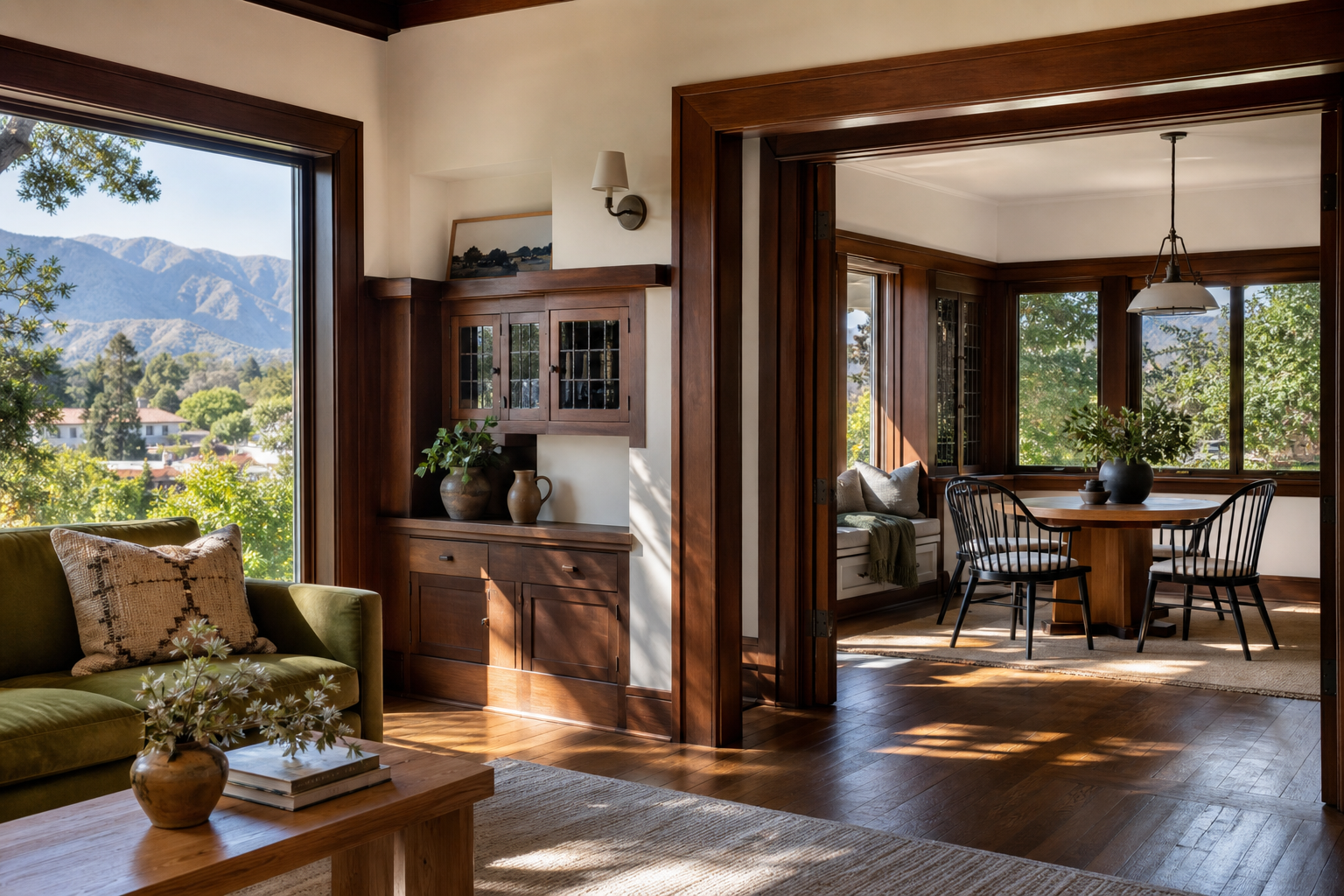
Pasadena is not a typical suburban bedroom community. It is an economically anchored city with institutional employment, cultural infrastructure, and a housing stock that spans historic Craftsman neighborhoods to modern townhome developments. The buyers who choose Pasadena are often specifically choosing it — for the schools, for the walkability of Old Town, for the proximity to Caltech and the broader academic corridor, and for the lifestyle that the Rose Bowl adjacent neighborhoods offer.
That anchored demand is why the broader LA County softening hasn't replicated itself in Pasadena's sales market. The people who want to be here still want to be here, and the reasons they want to be here haven't changed.
The JPL Factor: A Localized Variable Worth Watching
One variable that doesn't appear in the county-level data but is very much present on the ground in Pasadena is the ongoing uncertainty around NASA's Jet Propulsion Laboratory and its 2027 fiscal year funding picture.
JPL is a major employer in the Pasadena ecosystem. Its workforce — engineers, scientists, researchers, and the broader contractor and vendor community that surrounds it — is disproportionately concentrated in specific Pasadena neighborhoods, particularly West Pasadena and Altadena. The current federal budget discussions around science mission funding have created a "wait and watch" posture among a portion of that workforce. Some households that might otherwise have been sellers are holding. Others who were considering purchases are pausing.
The practical effect of that pause is a slight but measurable uptick in inventory in those two specific corridors — and a corresponding reduction in buyer competition relative to other parts of the city.
For buyers who have been sidelined for years by Pasadena's competitiveness, West Pasadena and Altadena represent a legitimate window of opportunity right now. Not a distressed opportunity — these are not neighborhoods in decline. But a timing opportunity, where the local uncertainty is creating a brief softening in demand that is unlikely to persist once the JPL budget picture clarifies.
Q: Is the JPL situation a reason to avoid buying in West Pasadena or Altadena?
A: No, and here's why. The long-term fundamentals of both neighborhoods — location, schools, architectural character, proximity to the Rose Bowl and the Angeles National Forest — are unchanged. What's creating the current opportunity is uncertainty, not deterioration. Buyers who can operate strategically within uncertainty typically capture the best long-term value. Buyers who wait for certainty typically find that the window has closed.
Strategic Playbook for Sellers in May 2026
The Pasadena seller who succeeds in this market is not the one who lists and waits. It's the one who approaches their sale with the same precision the market itself is displaying.
Presentation is not optional — it's the product. In a market where 14% more inventory means buyers have more to compare, the condition and presentation of your home is a direct competitive differentiator. Homes that are professionally staged, photographed with high-resolution photography and video, and marketed across the full digital footprint — Zillow, Redfin, Instagram, targeted digital advertising — are not just selling faster. They are selling for more.
Pricing is a strategy, not a guess. The 2022 pricing environment, where you could list 10% above comparable sales and still generate offers, is not the 2026 environment. Today's buyers are educated. They have access to the same data your agent has, and they know when a home is priced above its defensible range. Pricing your home correctly at launch — supported by a current Comparative Market Analysis that reflects closed sales from the last 60 to 90 days — is the single highest-leverage decision you'll make in your sale.
The first 30 days are everything. Buyer interest in Pasadena is highest in the first two to three weeks of a listing's life. That's when the algorithms surface it, when the most qualified buyers schedule showings, and when offers are most likely to come in above asking price. If your launch strategy isn't calibrated to maximize that window, you're leaving money on the table.
Questions to ask yourself before you list:
- Am I pricing for the 2022 peak or the 2026 reality?
- Does my home offer the flex-space — ADU, dedicated home office, or convertible bonus room — that the majority of today's buyers are specifically searching for?
- Is my home in the condition that a qualified buyer with a conventional loan can close without repair negotiations?
- Have I walked my home as a buyer would and addressed the things a home inspector would flag?
Strategic Playbook for Buyers in May 2026
The buyers who are winning in Pasadena right now are not the ones with the highest offer prices. They are the ones who are positioned to move with confidence and close without complications.
The 103% sale-to-list ratio is a context clue, not a ceiling. Yes, competitive homes are still receiving offers above asking. But the increase in days on market means you now have something you didn't have in 2022: the ability to identify where that competition is concentrated and where it isn't. The homes that receive multiple offers within days of listing are the move-in-ready, accurately priced gems. There is a parallel universe of listings in Pasadena right now — the 45-plus-day homes — where sellers have recalibrated their expectations and buyers have genuine negotiating leverage.
Focus on stale listings with strong bones. A home that has been on the market for 50 or 60 days in Pasadena is not necessarily a bad home. It may be a well-located, fundamentally sound property that launched at the wrong price and has since found its real market range. These are the listings where you can ask for credits, negotiate repairs, and in some cases purchase below the original list price — in a market where 54% of homes are closing above asking.
Pre-approval is not enough — you need a market-ready pre-approval. In a market where the best properties still move quickly, the quality of your financing preparation matters as much as your offer price. A pre-approval letter from a lender your agent knows and trusts, structured to allow a 14-day close if necessary, is a competitive tool. A pre-approval from an online lender with no local track record is a liability.
Questions to ask yourself before you make an offer:
- Is this home priced at its current market value, or is the seller still anchored to 2022 expectations?
- Have I had a pre-inspection or reviewed the seller's disclosures to understand what I'm actually buying?
- Is my financing structured to allow me to move quickly if we find the right property?
- Am I working with an agent who has closed transactions in this specific Pasadena submarket recently — not just an agent who is licensed in the county?
The Bottom Line: Pasadena in May 2026 Rewards Precision
The story of Pasadena's real estate market in May 2026 is not one of dramatic highs or alarming lows. It is a story of a market that has matured past the frenzy of the pandemic era and arrived at something more sustainable — and for informed participants, more navigable.
The median price is holding. The best homes are still generating competition. Buyers have more breathing room than they've had in four years. And specific corridors — West Pasadena, Altadena — are creating localized windows of opportunity that didn't exist twelve months ago.
What this market does not reward is passivity. Sellers who list without preparation, buyers who wait for the perfect moment that never comes, and anyone who relies on county-level headlines to make neighborhood-level decisions will find this market frustrating. Those who engage with current data, clear strategy, and experienced local guidance will find it full of possibility.
Ready to Make a Move in Pasadena?
Whether you're thinking about listing this spring, searching for the right entry point as a buyer, or simply trying to understand what your current home is worth in today's market, the conversation starts with accurate, local, current information — not countywide averages or national headlines.
Our team works in this market every day. We know which streets are generating multiple offers, which listings have room to negotiate, and how to position you to succeed whether you're buying or selling.
Let's talk. Your Pasadena real estate strategy starts here.
Categories
Recent Posts