
Why Pasadena Attracts Luxury Real Estate Investors
Why does Pasadena attract luxury real estate investors?
Pasadena attracts luxury real estate investors because it pairs a rare concentration of architecturally distinctive historic homes with an established commercial base and a high-priced single-family market. The city reports more than 200 individually designated historic sites and 26 historic neighborhoods, which limits how much look-alike inventory ever comes to market. Returns are never guaranteed, so every property needs its own numbers and its own due diligence.
Key Takeaways
- The City of Pasadena reports more than 200 individually designated historic sites and 26 historic neighborhoods, and that scarcity is the core of the luxury investment case.
- A Q2 2026 third-party report put the Pasadena single-family median at $1,647,500, up from $1,550,000 in Q1 2026, with closed single-family sales rising from 129 to 178.
- Pasadena's Mills Act program can reduce property taxes on qualifying historic properties in exchange for rehabilitation and maintenance commitments, but eligibility must be confirmed with the city and county first.
- Historic designation can limit exterior changes, so confirm a property's exact status and review requirements before you write an offer.
- Pasadena's economic development office reported in February 2026 that the city is home to nearly 5,000 small businesses, which supports the established commercial base around the housing market.
How does scarce historic housing explain why Pasadena attracts luxury real estate investors?
Scarcity is the answer. You can build a new luxury home almost anywhere. You cannot build a 100-year-old architectural landmark, and Pasadena has a large number of them.
The City of Pasadena reports more than 200 individually designated historic sites and 26 historic neighborhoods. Separately, the city's designation and incentives page says more than 130 local properties have been designated as landmarks or historic monuments, including the Gamble House, Pasadena City Hall, and the Colorado Street Bridge. It also identifies 47 sites and structures as landmarks and six areas as historic districts. Those figures describe different designation categories, so don't add them together.
What matters for you as an investor is what that base does to the market. Character-rich, hard-to-replicate properties tend to hold their appeal in a way interchangeable new construction may not. I say "may not" on purpose, because scarcity supports a luxury segment but doesn't prove appreciation, rental yield, or resale liquidity on any given address.
What does the city's preservation program actually cover?
The city's historic preservation program covers the identification, evaluation, rehabilitation, adaptive reuse, and restoration of historic structures. For an investor, that means the city has an established process for the work many historic buyers plan to do. It also means that work may come with review.
Can a Mills Act contract improve the math?
It can, for some properties. The city identifies the Mills Act, also called the Historic Property Contract Program, as a way to reduce property taxes on qualifying privately owned historic properties in exchange for rehabilitation, restoration, and maintenance commitments.
Don't underwrite a purchase on that benefit until you've confirmed eligibility, contract obligations, and approval requirements with the city and the county. This is exactly the kind of question I walk my clients through before we ever write an offer.
Is every luxury property in Pasadena historic?
No, and luxury value isn't uniform across the city. In my experience working with buyers in Pasadena, I separate properties into a few location types:
- Homes near established historic and architectural districts
- Arroyo-adjacent west side properties
- Homes near the central civic and cultural core
- Hillside and view-oriented locations
Each behaves differently on price, lot characteristics, and renovation potential. Current price ranges for each depend on fresh MLS comparables, which I pull for every client rather than quote from memory. For a wider look at the market, see my honest guide to buying a home in Pasadena.
What do Pasadena's business base and market activity add to the case?
They add commercial depth and a market with real transaction volume. An investor wants to see established commercial districts and services around the asset, and evidence that homes actually trade.
Pasadena's economic development office is responsible for encouraging business investment and supporting business retention and attraction. The Pasadena Economic Development Corporation reported in February 2026 that the city is home to nearly 5,000 small businesses. That's a citywide business count, not a measure of luxury returns, but it shows the kind of established commercial footprint that supports the area.
What do the most recent Pasadena sales numbers show?
The most recent quarterly data I can point you to is from Q2 2026. A third-party Pasadena market report (not MLS data) identified Pasadena as the largest market in its San Gabriel Valley coverage that quarter, with 283 closed transactions: 178 single-family sales and 105 condo sales.
| Pasadena single-family metric | Q1 2026 | Q2 2026 |
|---|---|---|
| Closed single-family sales | 129 | 178 |
| Single-family median price | $1,550,000 | $1,647,500 |
Source: third-party Pasadena market report. These figures cover all single-family sales, not just the luxury tier, and they describe April through June 2026. They don't tell you where the market sits today.
What they do show is a market with real depth: sales volume and median price both rose from Q1 to Q2. For a closer read on how I interpret figures like these, see my breakdown of the economics of the Pasadena market. For luxury-specific inventory, days on market, and sale-to-list ratios, the right source is current MLS data, and that's what I run with every investor.
Why does this matter to the way Pasadena attracts luxury real estate investors?
Because liquidity and scarcity work together. A rare property in a market that actually trades is a very different asset from a rare property in a market where nothing sells. That combination is a big part of why Pasadena attracts luxury real estate investors who are comparing it to other San Gabriel Valley cities.
If you're weighing Pasadena against San Marino, Arcadia, or other nearby cities, I compare them on property attributes only: lot size, architectural style, age, renovation potential, and current comparable sales. You can also read my take on top San Gabriel Valley investment neighborhoods.
What risks should investors weigh before buying a luxury or historic property in Pasadena?
The biggest risks are regulatory surprises, renovation limits, and overpaying for character. Historic status adds value in some cases and constrains it in others, so the work happens before you make an offer, not after.
The city's pages note that historic designation can constrain exterior alterations. Landmarks, landmark districts, historic districts, and National Register listings are different categories, and they don't necessarily impose the same restrictions. Before you offer on a historic or possibly historic property, I walk through this checklist with clients:
- Verify the property's designation and which category it falls under.
- Review any applicable district guidelines with the city's historic preservation staff.
- Confirm whether exterior work needs city review. That includes additions, demolitions, landscaping changes, and renovations.
- Check Mills Act eligibility with the city and county before counting any tax benefit.
- Pressure-test your numbers against current comparable sales, not last quarter's headline median.
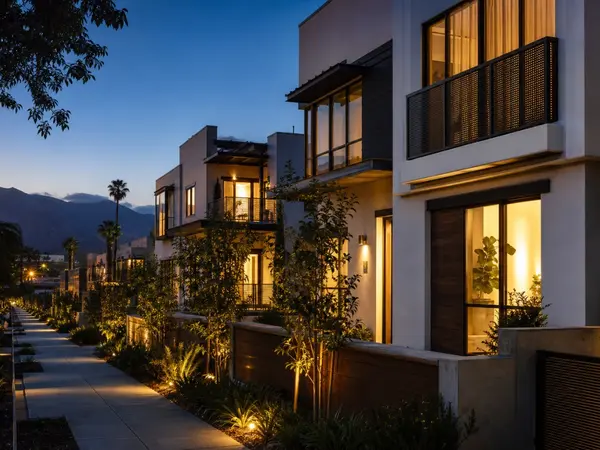
New construction is the other side of the coin. If you'd rather avoid preservation review entirely, look at what is actually being built in Pasadena before you decide.
What's the next step if you're evaluating a Pasadena property?
Start with the specific property, not the city. The reasons Pasadena attracts luxury real estate investors are real, but they show up differently on every address. Your numbers depend on the property's designation, condition, location type, and the comparable sales around it, and that's where a local market analysis earns its keep.
My team and I cover Pasadena and the wider San Gabriel Valley, so we can compare options across the area, including luxury estates, multi-family, land, and new construction. If you'd like to see how a specific property or strategy would hold up, schedule a consultation with me and we'll go through it together.
FAQ
Why do luxury investors choose Pasadena over other San Gabriel Valley cities?
Many choose Pasadena for its concentration of architecturally distinctive historic properties and its established commercial base. The city reports more than 200 individually designated historic sites and 26 historic neighborhoods. The right fit still depends on the specific property, so I compare cities on lot, style, age, and current comps.
Are Pasadena historic homes good investments despite renovation restrictions?
They can be, but it depends on the property's designation and your plans. Designation can constrain exterior alterations, so you need to confirm which rules apply before you buy. Some owners may also qualify for the Mills Act property-tax program, which you should verify with the city and county.
Does Pasadena have enough inventory for investors seeking high-end homes?
Inventory in the luxury tier is limited and changes month to month. A Q2 2026 third-party report counted 178 closed single-family sales in Pasadena, but that covers every price point. For current luxury inventory, I pull live MLS data for each client.
What types of luxury properties are most in demand in Pasadena?
Architecturally distinctive single-family homes, including historic properties, are a defining part of Pasadena's high-end market. Demand varies by location type, such as hillside view properties, Arroyo-adjacent areas, and homes near the civic core. Current demand by category is something I verify with recent comparable sales.
What risks should I consider before buying a historic or luxury property in Pasadena?
The main risks are renovation limits, review requirements, and paying too much for character. Verify designation, district guidelines, and whether planned work needs city approval before you offer. Then test your assumptions against current comparable sales.
Equal Housing Opportunity. Eddy Chen, Broker Associate with REAL Brokerage. This article is general information, not legal, tax, or financial advice. Confirm your own numbers with your closing agent, tax advisor, or lender.
Categories
Recent Posts